The best saltwater rinse recipe for your mouth is ½ teaspoon of salt dissolved in 8 ounces (1 cup) of comfortably warm water. Stir until dissolved, swish gently for 15–30 seconds, and spit it out. You can repeat the rinse two to three times daily for temporary relief from minor gum irritation, canker sores, or mouth discomfort, unless your dentist recommends otherwise.
A saltwater rinse is inexpensive and easy to prepare. However, it cannot cure tooth infections, cavities, or gum disease.
At Dent Blanche Dental in Princeton, NJ, we recommend understanding when home care helps—and when professional dental treatment is necessary.
Overview: What Is a Saltwater Rinse?
A saltwater rinse is a simple mixture of salt and warm water used to gently clean and soothe the mouth.
Patients commonly use a salt and water rinse for:
- Mild gum irritation
- Canker sore discomfort
- Minor mouth tenderness
- Gentle cleaning after certain dental procedures
- Temporary relief while waiting for dental care
Although salt water may soothe irritated tissues, it does not replace brushing, flossing, or professional treatment.
Key Takeaways
- Recipe: Mix ½ teaspoon of salt with 8 ounces of warm water.
- Rinse: Swish gently for 15–30 seconds and spit.
- Frequency: Two to three times daily for short-term use, or as directed.
- Benefits: May temporarily soothe canker sores and irritated gums.
- After extraction: Avoid rinsing during the first 24 hours unless your dentist instructs otherwise.
- Limitations: Saltwater cannot cure cavities, abscesses, or periodontal disease.
- Warning signs: Persistent pain, swelling, pus, or fever requires dental evaluation.
What You Will Need for a Saltwater Rinse Recipe
You only need two ingredients:
- ½ teaspoon of table salt
- 8 ounces (1 cup) of warm water
Regular table salt, iodized salt, or plain sea salt can work.
Use clean water that feels comfortably warm, not hot.
Avoid adding hydrogen peroxide, essential oils, or other ingredients unless your dentist recommends them.
How to Make a Saltwater Rinse — Step by Step
Wondering how to make a salt water rinse for your mouth?
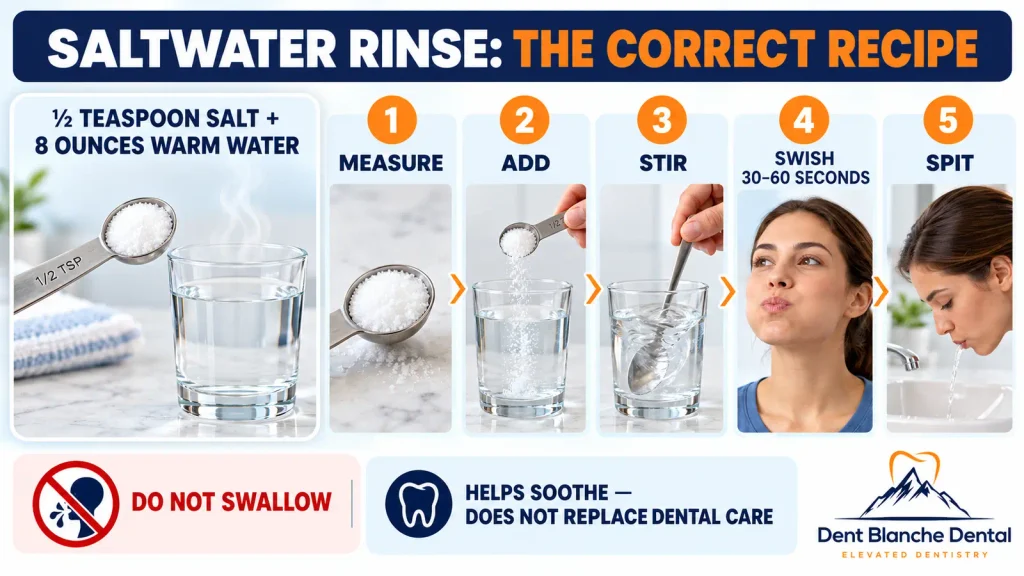
Follow these simple steps:
- Pour 8 ounces of warm water into a clean cup.
- Add ½ teaspoon of salt.
- Stir until the salt dissolves completely.
- Take a small sip.
- Swish gently around your mouth for 15–30 seconds.
- Spit the solution into the sink.
- Repeat as needed using the remaining solution.
Do not swallow the rinse.
Prepare a fresh solution when needed rather than storing it for repeated use.
What Is the Correct Saltwater Rinse Ratio?
The recommended salt water mouthwash ratio is:
½ teaspoon salt : 8 ounces warm water
| Ingredient | Amount |
|---|---|
| Salt | ½ teaspoon |
| Warm water | 8 ounces (1 cup) |
| Rinsing time | 15–30 seconds |
| Frequency | 2–3 times daily, as appropriate |
Using more salt does not necessarily improve results. In fact, overly concentrated saltwater may irritate sensitive oral tissues.
How Often Should You Use a Saltwater Rinse?
For temporary mouth irritation, rinsing two to three times daily is generally reasonable.
However, your dentist may recommend a different schedule following oral surgery or other dental treatment.
Saltwater rinses are best used as short-term supportive care.
If you need them continuously because of pain, swelling, or bleeding, schedule a dental examination to identify the underlying cause.
Saltwater Rinse After Tooth Extraction
After a tooth extraction, a blood clot forms in the socket and protects the healing tissues.
During the first 24 hours:
- Avoid vigorous rinsing.
- Avoid forceful spitting.
- Do not use a straw.
- Follow your dentist’s postoperative instructions.
After 24 hours, your dentist may recommend gentle saltwater rinses.
Instead of swishing forcefully, allow the solution to move gently around the mouth and let it drain out.
Aggressive rinsing can disturb the blood clot and increase the risk of complications, including dry socket.
What Does a Saltwater Rinse Help With?
A saltwater rinse can help keep the mouth comfortable and gently remove loose debris.
However, its benefits depend on the condition being treated.
Salt Water Rinse for Gums
A salt water rinse for gums may temporarily soothe mild tenderness or irritation.
Nevertheless, persistent bleeding, swelling, or gum recession may indicate gingivitis or periodontal disease.
Saltwater does not remove hardened tartar or replace professional gum treatment.
Salt Water and Canker Sores
Does salt water rinse help canker sores?
Yes, gentle rinsing may help keep the area clean and provide temporary comfort. However, saltwater does not reliably make every canker sore heal faster.
A salt water mouth rinse for canker sores may sting briefly.
If the rinse causes significant irritation, discontinue it and ask your dentist about alternatives.
Salt Water Rinse for Tooth Pain
A salt water rinse for a tooth may temporarily relieve discomfort caused by minor irritation or trapped debris.
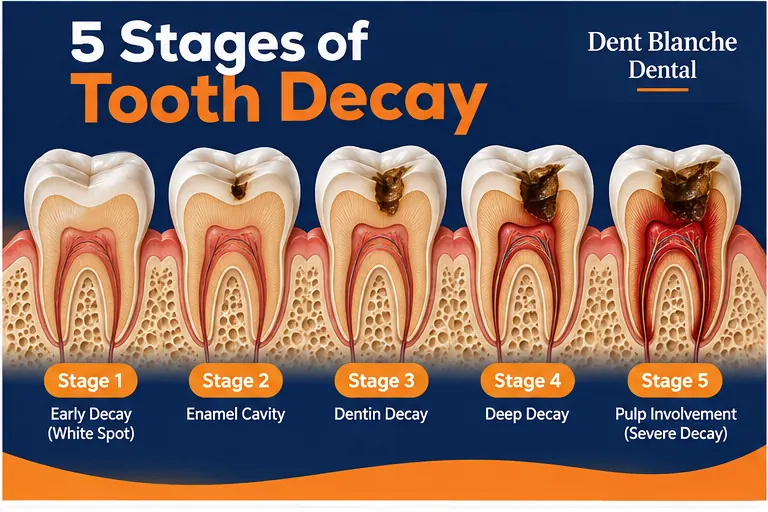
However, saltwater cannot repair a cavity, treat an infected tooth nerve, or eliminate a dental abscess.
If your toothache persists, seek professional dental care.
Salt Water Gargle Recipe for Sore Throat
The same basic recipe—½ teaspoon of salt in 8 ounces of warm water—is commonly used for gargling.
Gargle gently and spit out the solution.
A saltwater gargle may temporarily soothe throat irritation, but it does not treat every cause of a sore throat.
What a Saltwater Rinse Cannot Do
Using salt water as mouthwash may provide temporary comfort, but it cannot:
- Reverse established tooth decay
- Cure a tooth abscess
- Eliminate a deep dental infection
- Remove plaque or tartar completely
- Stop advanced gum disease
- Replace prescribed medication when needed
- Substitute for brushing and flossing
For example, a dental abscess usually requires treatment directed at the source of infection, such as drainage, root canal treatment, or extraction.
If you have swelling associated with a tooth infection, read our guide to Antibiotics for Tooth Infection.
When to See Your Dentist
Contact your dentist if you notice:
- Persistent tooth pain
- Gum swelling or bleeding
- Pus or an unpleasant taste
- Sensitivity that keeps returning
- A mouth ulcer lasting longer than two weeks
- Symptoms that worsen despite home care
Seek urgent dental evaluation for significant pain, facial swelling, or fever associated with a dental problem.
Go to an emergency department immediately if you have difficulty breathing or swallowing, rapidly spreading facial or neck swelling, or swelling affecting the eye.
Saltwater rinsing should never delay necessary emergency treatment.
Saltwater Rinse Recipe FAQs
How much salt for a salt water rinse?
Use ½ teaspoon of salt for every 8 ounces of warm water. This is a commonly recommended saltwater rinse ratio for temporary oral comfort.
How do I make a salt water mouth rinse?
Mix ½ teaspoon of salt into 1 cup of warm water. Stir, swish gently for 15–30 seconds, and spit.
What salt should I use for a saltwater rinse?
Regular table salt works well. Iodized salt is acceptable. Plain sea salt can also be used if it dissolves completely.
Should I use a saltwater rinse before or after brushing?
You can rinse before brushing or at a separate time. If you use fluoride toothpaste, avoid immediately rinsing it away after brushing so the fluoride remains on your teeth longer.
Can I use bottled or distilled water?
Yes. Clean bottled, distilled, or potable tap water can be used. Follow any specific water recommendations from your dentist after a procedure.
Is it safe to rinse salt water every day?
Short-term daily use is generally tolerated by most adults. However, frequent rinsing is unnecessary when your mouth is healthy. Persistent symptoms require evaluation.
Can children use a saltwater mouth rinse?
Only children who can reliably swish and spit without swallowing should use one, and adult supervision is recommended. Ask your dentist if you are unsure.
Does salt water help teeth?
Saltwater may temporarily soothe surrounding tissues, but it does not strengthen enamel, reverse cavities, or replace fluoride toothpaste.
Can I use saltwater instead of mouthwash?
Saltwater can serve as a temporary soothing rinse. However, it does not provide the same benefits as fluoride rinses or professionally recommended antimicrobial mouthwashes.
Can I use saltwater after wisdom teeth removal?
Usually, gentle saltwater rinsing may begin after the first 24 hours, depending on your surgeon’s instructions. Avoid vigorous rinsing during early healing.
The Bottom Line
The correct saltwater rinse recipe is simple: ½ teaspoon of salt mixed with 8 ounces of warm water.
Used gently, it may provide temporary relief from minor mouth irritation, canker sores, and tender gums.
However, it cannot treat cavities, dental abscesses, or advanced gum disease.
If symptoms persist or worsen, professional dental care is the safest next step.
Persistent Gum Pain or Mouth Irritation? Visit Dent Blanche Dental
At Dent Blanche Dental in Princeton, NJ, Dr. Radwa Saad and our team provide personalized preventive, restorative, and emergency dental care.
Whether you have irritated gums, recurring mouth sores, tooth sensitivity, or a possible dental infection, we can identify the cause and recommend appropriate treatment.
Don’t rely on home remedies when your mouth needs professional care.
Schedule Your Dental Appointment
Call: 609-890-1888
Dent Blanche Dental
3640 Lawrenceville Road
Princeton, NJ 08540