Medically Reviewed and Last updated on 10/17/2026
Mouth sores are ulcers, blisters, or irritated areas that develop on the lips, gums, tongue, cheeks, or roof of the mouth. Common causes include canker sores, accidental bites, viral infections, and irritation from dental appliances. Many minor mouth sores heal within one to two weeks. To relieve discomfort, avoid spicy foods, maintain gentle oral hygiene, and use appropriate oral rinses or pain-relief products. However, any unexplained sore that lasts longer than two weeks needs professional evaluation.
At Dent Blanche Dental in Princeton, NJ, General Dentist Dr. Radwa Saad evaluates persistent mouth sores and oral tissue changes to help patients identify the cause and receive appropriate treatment.
Overview: What Are Mouth Sores?
Mouth sores can appear as small ulcers, fluid-filled blisters, red patches, or irritated areas inside or around the mouth.
They may affect:
- The inside of the lips
- The cheeks
- The gums
- The tongue
- The roof of the mouth
- The corners of the lips
Some mouth sores are painful, while others cause little discomfort.
Importantly, not every white patch or mouth lesion is an ulcer. Different conditions require different treatments.
Key Takeaways
- Most minor mouth sores heal within 7–14 days.
- Canker sores are not contagious, but cold sores caused by herpes simplex virus are contagious.
- Mouth sores inside the lip or cheek often result from minor trauma or canker sores.
- Dental appliances, infections, medications, and inflammatory conditions can cause oral lesions.
- Gentle saltwater rinses may temporarily soothe discomfort.
- Persistent sores, unexplained bleeding, or unusual patches require examination.
- A mouth ulcer lasting longer than two weeks should be evaluated to rule out more serious conditions.
Sores in Your Mouth: Where Do They Develop?
The location of a mouth sore can provide clues about its cause.
| Location | Possible causes |
|---|---|
| Inside the lip | Canker sores, accidental biting, irritation, mucoceles |
| Inside the cheek | Cheek biting, aphthous ulcers, sharp teeth |
| Gums | Trauma, infection, inflammatory conditions |
| Tongue | Biting, canker sores, irritation, infections |
| Roof of mouth | Burns, trauma, viral lesions |
| Outer lip | Cold sores, irritation, other skin conditions |
| Corners of mouth | Angular cheilitis |
Although location is helpful, appearance and symptoms alone cannot always establish a diagnosis.

Types of Mouth sores
Types of Mouth Sores
Understanding the different types of sores in the mouth can help you recognize when home care is reasonable and when you need treatment.
Canker Sores (Aphthous Ulcers)
Canker sores are small, painful ulcers that develop inside the mouth.
They often appear as shallow white or yellow lesions with a red border.
Common locations include the inner lips, cheeks, and tongue.
Canker sores are not contagious.
Minor canker sores usually heal within one to two weeks.
Cold Sores (Fever Blisters)
Cold sores are caused by herpes simplex virus, most commonly HSV-1.
They typically develop as clusters of small blisters on or around the lips.
Symptoms may include:
- Tingling or burning before the outbreak
- Fluid-filled blisters
- Tenderness
- Crusting during healing
Unlike canker sores, cold sores are contagious, particularly when active lesions are present.
Prescription antiviral medications may help when used early.
Mouth Sores Inside the Lip
A mouth sore inside the lip may be caused by:
- A canker sore
- Accidental biting
- Irritation from braces
- A sharp tooth
- A mucocele, or mucus-filled cyst
A mucocele often appears as a smooth, soft bump rather than an open ulcer.
Persistent lip lesions require professional evaluation.
Gum Sores
Gum sores may develop because of trauma, inflammation, or infection.
However, a painful gum swelling with pus or a pimple-like bump near a tooth may indicate a dental abscess.
A dental abscess cannot be cured with home rinses alone.
Leukoplakia
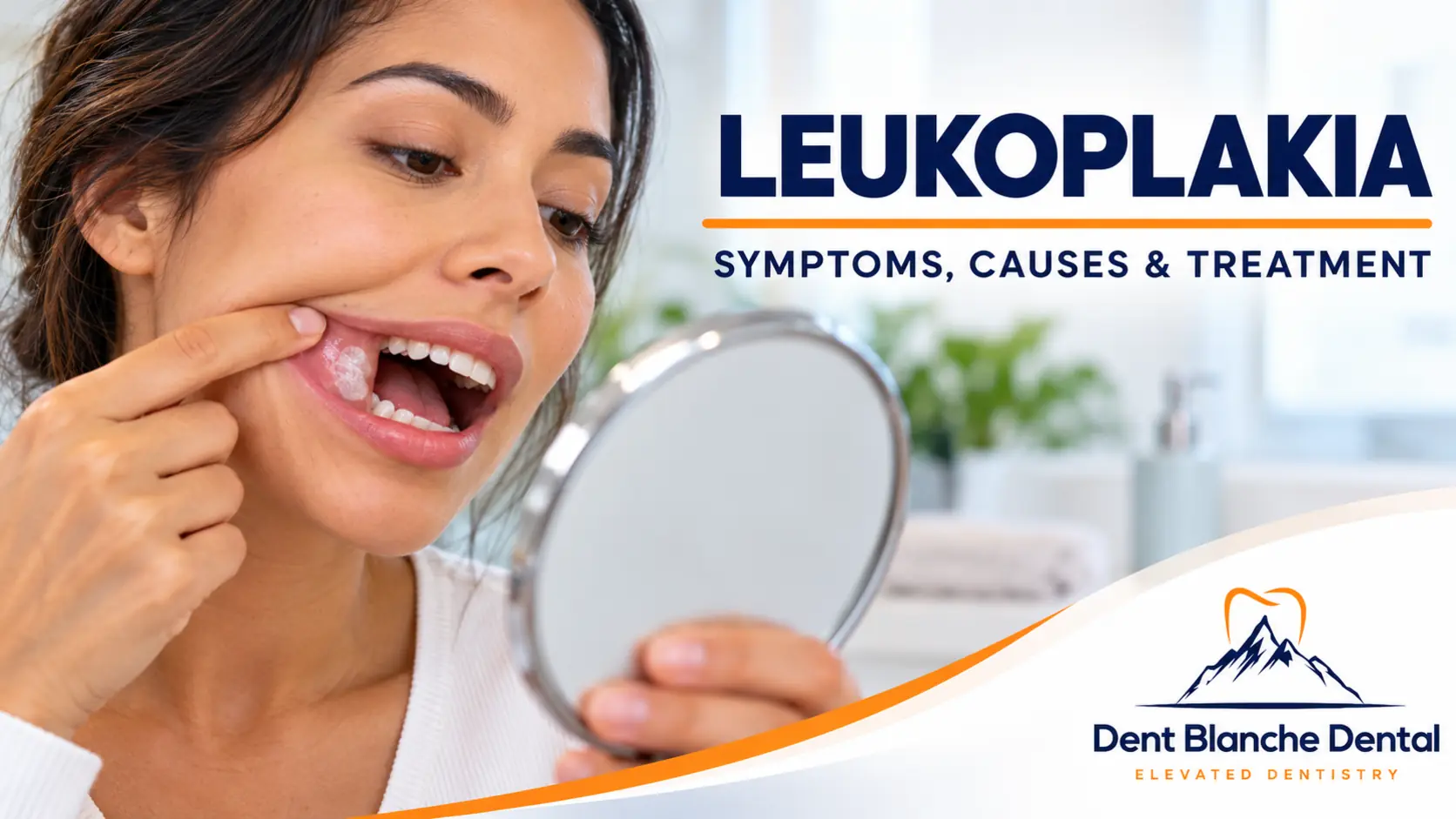
Leukoplakia usually appears as a persistent white patch that cannot be scraped away.
It is not typically an open sore.
Although many lesions are not cancerous, some contain precancerous changes.
Read our guide to Leukoplakia: Symptoms, Causes and Treatment.
Oral Thrush (Candidiasis)
Oral thrush is a fungal infection that may cause creamy white patches, redness, or burning.
It can occur in people who wear dentures, use certain medications, or have underlying health conditions.
Treatment may require antifungal medication.
Oral Lichen Planus
Oral lichen planus is a chronic inflammatory condition that may cause white lace-like patches, red areas, or painful ulcers.
It requires professional diagnosis and, in some cases, ongoing monitoring.
Oral Cancer
A persistent mouth ulcer or unexplained oral tissue change can sometimes be a sign of oral cancer.
Warning signs include:
- A sore lasting longer than two weeks
- Unexplained bleeding
- A persistent lump
- Red or white patches
- Difficulty swallowing
- Persistent numbness or pain
Early evaluation is important, even when the lesion is painless.
Mouth Sore Causes
Several factors can contribute to mouth sores.
Infections
Viral infections, including herpes simplex and hand, foot, and mouth disease, may cause oral blisters or ulcers.
Fungal infections can also produce oral lesions.
Trauma and Dental Appliances
Common triggers include:
- Accidentally biting your cheek
- Burns from hot foods
- Sharp or broken teeth
- Braces and orthodontic wires
- Poorly fitting dentures
Correcting the source of irritation may help prevent recurring sores.
Food Sensitivities and Allergic Reactions
Certain foods or oral care ingredients may irritate sensitive tissues.
However, not every sore after eating is an allergic reaction.
Stress and Hormonal Changes
Stress and hormonal fluctuations may contribute to recurrent canker sores in susceptible individuals.
Nutritional Deficiencies
Low levels of iron, vitamin B12, or folate can sometimes be associated with recurrent oral ulcers.
Tobacco and Alcohol
Tobacco use and heavy alcohol consumption increase the risk of oral tissue damage and oral cancer.
Underlying Medical Conditions
Recurring or unusually severe ulcers may sometimes be associated with inflammatory, gastrointestinal, immune-related, or other systemic conditions.
Your dentist may recommend medical evaluation when appropriate.
Symptoms of Mouth Sores and Spots
Common symptoms include:
- Pain or tenderness
- Redness
- White or yellow ulcer centers
- Blisters
- Burning or tingling
- Difficulty eating
- Irritation while brushing
- Swelling
Fever, enlarged lymph nodes, or multiple painful lesions may occur with certain infections.
Seek medical attention promptly if mouth sores are accompanied by dehydration, significant swelling, or systemic illness.
Mouth Sore Treatment: How to Relieve Pain and Heal Safely
The best mouth sore treatment depends on the cause.
Over-the-Counter Products
Some oral protective pastes and pain-relief products may reduce discomfort.
Use only products intended for oral use and follow age-specific directions.
Avoid applying aspirin directly to the gums or ulcers.
Prescription Medications
Depending on the diagnosis, your dentist or physician may recommend:
- Topical corticosteroids for selected inflammatory ulcers
- Antiviral medications for herpes infections
- Antifungal treatment for oral candidiasis
- Other condition-specific treatment
Antibiotics are not appropriate for every mouth sore.
Saltwater Rinse
A gentle saltwater rinse may temporarily soothe minor irritation.
Mix:
½ teaspoon salt + 8 ounces warm water
Swish gently and spit.
For detailed instructions, read our Saltwater Rinse Recipe.
Avoid Irritating Foods
While a mouth sore heals, limit:
- Spicy foods
- Citrus fruits
- Acidic beverages
- Hard or crunchy snacks
- Very hot foods
Choose softer foods and drink enough water.
Maintain Gentle Oral Hygiene
Continue brushing twice daily using a soft toothbrush.
Clean between your teeth carefully.
Avoid harsh or alcohol-containing mouth rinses if they increase irritation.
Adjust Dental Appliances
If braces, dentures, or a broken restoration repeatedly irritate the same area, schedule a dental appointment.
Your dentist may adjust the appliance or repair the source of trauma.
When Should You See a Dentist for Mouth Sores?
Schedule an examination if:
- A sore lasts longer than two weeks.
- Sores recur frequently.
- The lesion grows or changes appearance.
- You notice persistent red or white patches.
- Eating or drinking becomes difficult.
- A sore repeatedly develops in the same location.
- You experience unexplained bleeding or numbness.
Seek urgent medical attention for severe dehydration, difficulty swallowing, rapidly spreading swelling, or breathing problems.
Mouth Sores FAQs
How Do You Get Rid of Mouth Sores?
Treatment depends on the cause. Gentle oral hygiene, avoiding irritating foods, and appropriate oral products may relieve minor sores. Persistent or recurring lesions require professional diagnosis.
What Causes Mouth Sores?
Common causes include accidental bites, canker sores, viral infections, dental appliance irritation, and inflammatory conditions. Some recurrent sores are associated with nutritional deficiencies or systemic illness.
What Causes Canker Sores in Your Mouth?
The exact cause is not fully understood. Triggers may include minor trauma, stress, certain foods, and hormonal changes.
How Do You Treat Mouth Sores Inside the Lip?
Avoid irritating the area, maintain gentle hygiene, and consider an appropriate oral protective product. If the sore lasts longer than two weeks, schedule an examination.
What Causes a Blister Inside the Lip?
A blister-like bump inside the lip may be a mucocele caused by minor salivary gland trauma. Other possibilities include irritation or infection. Persistent bumps should be evaluated.
How Do You Get Rid of Blisters in Your Mouth?
Do not pop or scrape them. Treatment depends on whether they result from a viral infection, trauma, or another condition.
What Is the Best Treatment for an Ulcer on the Lip?
The correct treatment depends on whether the lesion is a canker sore, cold sore, traumatic ulcer, or another condition. Antiviral medication may help cold sores, while other ulcers may need different treatment.
How Do Dental Appliances Cause Mouth Sores?
Braces, retainers, and dentures can rub against soft tissues. Adjusting the appliance or covering a sharp orthodontic edge with appropriate dental wax may reduce irritation.
How Do You Heal Sores in the Corner of Your Mouth?
Cracks at the corners of the mouth may indicate angular cheilitis. Keeping the area protected with a bland barrier ointment may help, but fungal or bacterial involvement may require targeted treatment.
Are Mouth Sores Contagious?
Most canker sores and traumatic ulcers are not contagious. Cold sores caused by herpes simplex virus are contagious.
How Long Do Mouth Sores Last?
Minor canker sores and traumatic ulcers often heal within one to two weeks. Persistent or worsening sores require evaluation.
Can Mouth Sores Be a Sign of Oral Cancer?
Yes, although most mouth sores are not cancer. A nonhealing ulcer, unexplained lump, or persistent red or white patch should be examined promptly.
The Bottom Line
Mouth sores can develop from minor irritation, infections, inflammatory conditions, or other health problems.
Many heal within one to two weeks with gentle care.
However, persistent or recurring mouth sores should never be ignored.
If a mouth sore lasts longer than two weeks, schedule a professional oral examination.
Persistent Mouth Sores? Visit Dent Blanche Dental in Princeton, NJ
At Dent Blanche Dental, Dr. Radwa Saad and our team provide comprehensive oral examinations and personalized dental care.
Whether you have painful ulcers, recurring mouth sores inside your lip, gum irritation, or an unexplained oral lesion, we can evaluate the area and recommend appropriate treatment or referral.
Don’t let persistent mouth sores affect your comfort or oral health.
Schedule Your Dental Appointment
Call: 609-890-1888
Dent Blanche Dental
3640 Lawrenceville Road
Princeton, NJ 08540