
Overview
Tooth pain and fever: Yes, a toothache combined with a fever indicates a dental emergency and should be evaluated promptly, ideally the same day. While a toothache alone can stem from various minor causes, a fever alongside it serves as your body’s alarm signal that a bacterial infection has moved beyond the tooth and is affecting your entire system. That changes the medical urgency entirely. Left untreated, the infection can spread rapidly, making subsequent treatment much more complex. At Dent Blanche Dental, we provide prompt, same-day urgent care to address the source of infection and restore your health.
Key Takeaways
- A fever combined with a toothache often signals a dental abscess—a bacterial infection spreading beyond the tooth.
- Pain that suddenly eases does not mean the infection is gone; it usually indicates pressure has temporarily released while the infection continues to grow.
- Facial, jaw, or neck swelling alongside a fever signifies a spreading infection requiring same-day professional care.
- Difficulty swallowing or breathing represents a life-threatening medical emergency requiring an immediate visit to the nearest emergency room.
- Antibiotics alone will not cure an abscess; the physical source of the infection must be treated directly by your dentist.
- Schedule an immediate evaluation at Dent Blanche Dental in Princeton or NYC if you are experiencing tooth pain and fever.
Why a Fever Changes Everything About a Toothache
Most toothaches originate inside the tooth structure. A deep cavity, a hairline crack, or a damaged filling can allow oral bacteria to reach the soft inner pulp where nerve endings reside. Once bacteria infiltrate the pulp, an aggressive infection develops quickly.
When that infection expands, your immune system mounts an active defense. A fever is one of the clearest physiological indicators that your body is fighting a systemic invader. In the context of a toothache, a fever from toothache activity means the infection has breached the confines of the tooth root and entered surrounding tissues or the bloodstream.
Consequently, fever acts as the critical dividing line between a toothache that can wait for a routine visit and an acute emergency that requires immediate intervention.
What Causes a Fever with a Toothache?
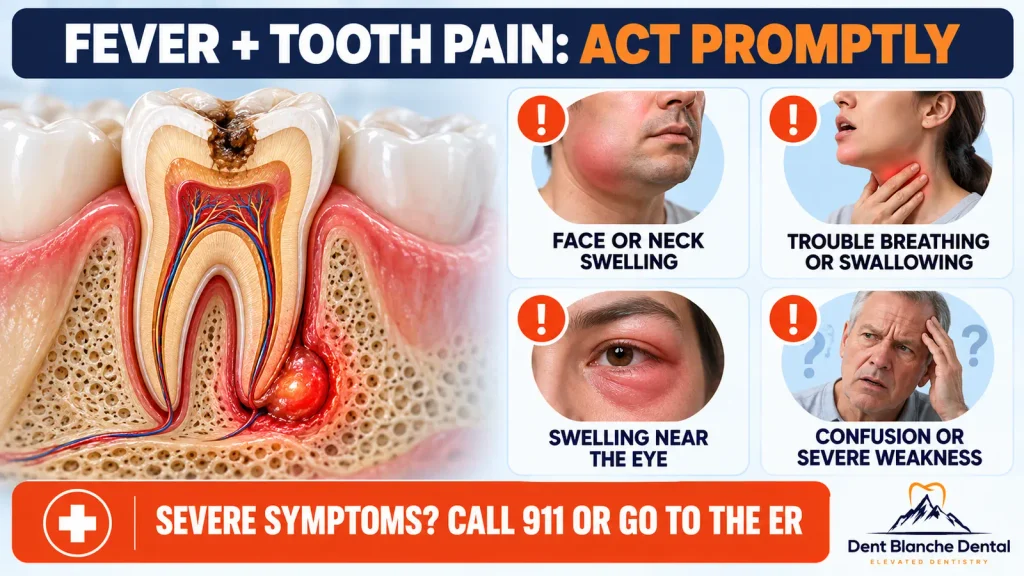
The most frequent cause of tooth pain fever symptoms is a dental abscess—a localized pocket of pus forming when bacteria infect the periodontal tissues around a tooth root. As bacteria multiply, the infection spreads into the gumline, jawbone, and facial soft tissues.
When individuals wonder can cavity cause fever, the answer is that untreated cavities eventually lead to pulp necrosis and bacterial leakage into the bone, triggering an immune-system fever response. Similarly, patients frequently ask does fever cause toothache or can a toothache cause a fever; while minor dental inflammation does not raise body temperature, an active bacterial abscess definitely causes a fever as your body fights the pathogen.
Symptoms That Mean You Need Care Today: Tooth pain and Fever
While fever is a vital warning sign, it rarely occurs in isolation. Experiencing toothaches with fever alongside any of the following clinical markers indicates an infection requiring same-day evaluation:
- Throbbing pain that radiates outward toward your jaw, ear, or neck
- Persistent headaches or temple pressure caused by inflammation along facial nerves
- Visible swelling in your cheek, facial tissues, or jawline, especially if it appeared rapidly
- A pimple-like pustule (fistula) on your gums near the aching tooth, representing the body attempting to drain infection
- A bitter or foul taste in your mouth signaling spontaneous abscess drainage
- Swollen or tender lymph nodes beneath your jaw or in your neck
- Lingering hot or cold sensitivity after thermal stimuli are removed
- A measured body temperature of 101°F (38.3°C) or higher
You do not need every single symptom on this list to have a serious condition; a throbbing toothache fever combination is reason enough to act immediately.
When Should I Go to the ER Instead of a Dental Office?
Most dental infections are best managed by an emergency dentist. However, certain severe symptoms mean you should bypass the dental office and report directly to a hospital emergency room:
- Difficulty swallowing or breathing, which indicates the infection has compromised your airway
- Swelling that has extended into your neck or is actively constricting your throat
- A fever above 101°F (38.3°C) accompanied by confusion, disorientation, or extreme lethargy
- Feeling faint, dizzy, or excessively weak
These symptoms are uncommon but represent a medical emergency requiring immediate 911 dispatch. Mouth infections can occasionally spread to vital structures like the brain and bloodstream if neglected. For localized throbbing, swelling, and tooth ache fever, your dental team at Dent Blanche Dental is the correct first call.
Why Does the Tooth Pain and Fever Sometimes Stop on Its Own?
Sometimes patients notice that toothache causes fever while throbbing pain suddenly stops on its own, leading them to believe the issue has resolved. In reality, the problem has rarely disappeared.
As internal pressure builds within an abscess, the tissue can rupture and drain, temporarily relieving discomfort. However, the underlying bacterial infection remains active. If your tooth ache with fever improves temporarily but swelling, foul tastes, or warmth persist, the infection is still progressing and requires immediate professional treatment.
Why Antibiotics Alone Will Not Fix Tooth Pain and Fever
Many patients ask whether a prescription for antibiotics will solve a fever due to toothache without visiting the clinic. While antibiotics help slow bacterial spread and reduce acute inflammation, they cannot eliminate the primary source of a dental abscess.
An abscess resides inside enclosed tooth structures or deep bone pockets where systemic antibiotics cannot fully penetrate. Without treating the physical source through root canal therapy, professional drainage, or extraction, the infection will almost certainly return once medication finishes. Professional source elimination is essential.
What to Do Right Now While You Wait for Your Appointment
If you are preparing to visit our office, these temporary measures can help manage discomfort safely while you wait:
- Rinse with Warm Salt Water: Mix half a teaspoon of salt into eight ounces of warm water and rinse gently to reduce oral bacteria and soothe soreness.
- Take Over-the-Counter Medication: Ibuprofen helps manage both discomfort and fever if you are medically cleared to take it.
- Apply a Cold Compress: Hold an ice pack wrapped in a cloth against the outside of your cheek for 15 to 20 minutes at a time to minimize swelling.
- Avoid Extreme Temperatures: Steer clear of very hot or very cold foods and drinks that trigger sharp nerve sensitivity.
- Do Not Manipulate the Area: Refrain from pressing, poking, or squeezing swollen gum tissues, as this can push bacteria deeper into surrounding tissue planes.
Frequently Asked Questions about Tooth pain and Fever
Can a tooth infection go away without treatment?
No. A dental abscess requires professional intervention to fully resolve. While symptoms may temporarily ease if an abscess drains spontaneously, active bacteria remain present and will continue spreading without clinical treatment.
Can a tooth infection cause headaches?
Yes. Severe dental abscesses frequently cause referred pain that radiates upward into the head, temples, and jaw, mimicking tension headaches or migraines.
Can I use leftover antibiotics I have at home?
No. Taking unprescribed or leftover antibiotics is dangerous. The specific drug, dosage, and duration must be matched precisely to your clinical condition. Using incorrect medications can breed antibiotic-resistant bacteria.
How quickly can a tooth infection spread?
Dental infections can advance rapidly over a short period. Infections migrating into the jaw, deep neck spaces, or airway become dangerous very quickly, which is why same-day care is mandatory when fever accompanies tooth pain.
Protect Your Smile and Health Today
If you are experiencing a fever and a toothache, do not wait. Immediate professional care prevents complications and simplifies treatment. Schedule your emergency evaluation with Dr. Radwa Saad at Dent Blanche Dental today.
- Princeton, NJ Office: 3640 Lawrenceville Rd, Princeton, NJ 08540 | Call: 609-890-1888
- New York City Office: 950 Fifth Ave, New York, NY 10075 | Call: 609-890-1888