
Overview
Recognizing the signs of blood infection from tooth issues as early as possible is vital for preventing a localized dental abscess. Dental infections can escalate into a severe, life-threatening systemic crisis.
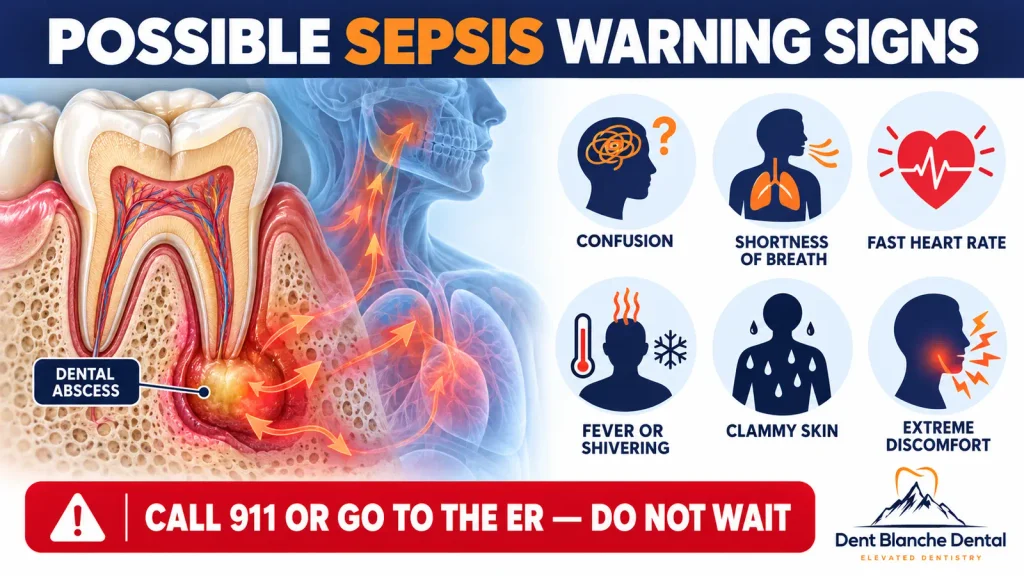
The initial warning signs that a tooth abscess may be progressing to sepsis include few symptoms. These might include a high fever (or an abnormally low body temperature), a rapid heart rate, intense chills, extreme physical exhaustion, mental confusion, accelerated breathing, difficulty swallowing, and expanding swelling across the face, jaw, or neck.
These red-flag symptoms indicate that aggressive oral bacteria have invaded the bloodstream and triggered a severe whole-body immune response. At Dent Blanche Dental, led by Dr. Radwa Saad, we help you understand these critical health warnings and offer comprehensive emergency and endodontic care once systemic health is medically stabilized.
Key Takeaways
- Septicemia from tooth infection develops when oral bacteria breach local anatomical boundaries and enter the vascular system, leading to systemic organ stress.
- The initial stages transition from localized dental throbbing to whole-body dysfunction, marked by a racing pulse, shortness of breath, and brain fog.
- Progressive neck swelling, labored breathing, or difficulty swallowing represent life-threatening airway risks requiring immediate 911 emergency medical care.
- Temporary relief from a bursting abscess is misleading because bacterial colonies continue to spread through underlying tissue planes.
- Schedule an urgent dental evaluation at Dent Blanche Dental in Princeton or NYC after medical emergency personnel have stabilized systemic health.
Can a Tooth Abscess Cause Sepsis?
Yes, a tooth abscess can certainly cause sepsis if left untreated, although it remains an uncommon outcome when professional dental care is sought early.
Sepsis develops when the body’s immune response to an infection becomes dysregulated, releasing inflammatory chemicals into the bloodstream that harm its own tissues and vital organs.
When an endodontic abscess remains neglected, aggressive bacterial strains—such as streptococcal and staphylococcal species can multiply. The multiplication exhaust the localized space inside the dental pulp and surrounding alveolar bone.
They track along fascia planes, entering nearby lymphatic vessels and the cardiovascular system. Understanding the dental sepsis stages helps clarify how quickly a localized dental problem can transform into a full-body medical emergency.
Understanding Signs of Blood Infection from Tooth: The Three-Stage Progression
1. Stage 1 — Localized Abscess
In this initial phase, bacteria remain confined strictly to the tooth root canal system and immediate periapical bone tissues. Symptoms center around localized, sharp throbbing pain, localized gum swelling, sensitivity to biting pressure, and thermal discomfort.
2. Stage 2 — Bacteremia
During the second phase, bacteria breach local tissue walls and invade surrounding blood vessels. The infection is no longer isolated to the mouth. Early systemic warnings appear, such as a rising fever, sudden chills, general malaise, and noticeable fatigue as the immune system struggles to contain the circulating pathogens.
3. Stage 3 — Sepsis and Septic Shock
In the final critical phase, the immune system’s dysregulated response triggers widespread vascular inflammation, compromising blood flow to major organs.
This stage leads to rapid blood pressure drops, organ dysfunction, and potential failure, demanding immediate hospital intensive care.
The timeline between localized tissue infection and widespread blood infection can be a matter of days—making prompt evaluation essential.
High-Risk Factors for Signs of Blood Infection from Tooth
While any untreated dental abscess carries inherent clinical risks, specific health factors significantly accelerate progression to a septic tooth symptoms state:
- Diabetes and Metabolic Disorders: High blood glucose levels impair white blood cell function and compromise microvascular circulation, reducing the body’s ability to wall off bacterial spread.
- Immunocompromised Conditions: Individuals undergoing active chemotherapy, living with HIV, or taking long-term immunosuppressive medications mount weaker inflammatory defenses against aggressive oral bacteria.
- Advanced Age: Older adults frequently present with muted fever responses, making it harder to spot severe infection until systemic decline occurs.
- Prior Incomplete Antibiotic Treatment: Taking leftover or incomplete courses of antibiotics without physically draining the dental abscess can breed resistant bacterial strains that continue to proliferate quietly.
Symptoms of Blood Poisoning from Abscess Tooth & Sepsis Warning Signs
If you experience two or more of the following symptoms of blood poisoning from abscess tooth conditions alongside a known toothache or dental abscess, report directly to an emergency room:
- High Fever or Unusually Low Temperature: Body temperature climbing above 101°F or dropping below 96.8°F, indicating immune system overload.
- Tachycardia (Rapid Heart Rate): A resting pulse exceeding 90 beats per minute, often felt as a racing or pounding heartbeat in the chest.
- Tachypnea (Rapid Breathing): Breathing faster than 20 breaths per minute or experiencing unexplained shortness of breath.
- Shaking Chills: Uncontrollable shivering and rigors despite an elevated core body temperature.
- Sudden Mental Status Changes: Confusion, disorientation, severe dizziness, or extreme mental fogginess.
- Skin Alterations: Cold, clammy, pale, or mottled skin resulting from compromised peripheral circulation.
Critical Red Flags: Facial and Neck Swelling
Swelling that extends beneath the lower jaw or into the deep soft tissues of the neck represents a critical medical condition known as Ludwig’s angina. This rapidly spreading cellulitis can push the tongue upward and backward, completely obstructing the airway within hours.
If facial swelling makes swallowing, speaking, or breathing difficult, or produces a sensation of throat constriction, do not attempt to visit a dental office. Call 911 or proceed immediately to the nearest hospital emergency room.
The Dangerous “Feeling Better” Trap
One of the most deceptive and dangerous patterns in emergency endodontics occurs when a severe abscess ruptures and drains spontaneously into the mouth. As built-up pus escapes, intense throbbing pressure decreases instantly, leading many patients to believe the infection has resolved on its own.
However, spontaneous drainage only relieves temporary mechanical pressure. The primary bacterial colony deep inside the tooth root remains completely intact and continues migrating into surrounding tissue spaces, bone marrow, and blood vessels. Experiencing temporary pain relief followed by sudden systemic symptoms like fever or extreme lethargy requires immediate emergency medical evaluation.
How to Prevent a Dental Abscess from Escalating
Preventing a localized tooth infection from turning into a systemic crisis relies on proactive dental care:
- Seeking professional treatment at the very first sign of tooth pain, sensitivity, or gum swelling.
- Completing the entire course of any prescribed antibiotics while ensuring the physical source of infection is eliminated.
- Never assuming that a draining abscess means the underlying infection is cured.
- Scheduling routine dental checkups to identify silent decay or micro-cracks before they reach the tooth pulp.
Frequently Asked Questions
Can a tooth abscess cause sepsis even if I am taking antibiotics?
Yes. Antibiotics travel through the bloodstream to help suppress bacterial spread, but they cannot physically drain enclosed pus pockets or clean out necrotic nerve tissue inside a tooth root canal. Without physical source removal by a dentist, bacteria can continue proliferating even during antibiotic therapy.
Is it possible to develop sepsis without running a high fever?
Yes. In older adults, diabetic patients, or immunocompromised individuals, the body may fail to produce a typical fever. An abnormally low body temperature (below 96.8°F) paired with a rapid heart rate, confusion, and extreme weakness is an equally dangerous sign of sepsis.
Should I go to an urgent care clinic or the emergency room for signs of blood infection from tooth?
Go directly to a hospital emergency room. Urgent care facilities lack the intensive care units, continuous intravenous antibiotic lines, and specialized blood-monitoring equipment required to manage systemic sepsis effectively.
What are the earliest tooth abscess signs before sepsis develops?
Early tooth abscess signs include persistent throbbing tooth pain, localized swelling along the gumline, a pimple-like bump (fistula) on the gums, a foul or bitter taste from draining fluid, and sharp pain when biting down.
Protect Your Health and Smile Today
Never ignore a spreading dental infection. Timely clinical treatment eliminates bacterial sources before they pose a threat to your overall well-being. For urgent dental care and definitive abscess treatments after medical emergency stabilization, contact Dr. Radwa Saad at Dent Blanche Dental.
- Princeton, NJ Office: 3640 Lawrenceville Rd, Princeton, NJ 08540 | Call: 609-890-1888
- New York City Office: 950 Fifth Ave, New York, NY 10075 | Call: 609-890-1888