

Medically Reviewed and last updated on 10/18/2026
The Lifespan of Dental Veneers: How Long Do They Really Last
Overview
How long do veneers last? Dental veneers typically last 5–15 years, depending on the material, oral hygiene, bite forces, and daily habits. Porcelain veneers often last 10–15 years or longer, while composite resin veneers generally last 5–7 years, sometimes up to 10 years with proper care.
At Dent Blanche Dental in Princeton, NJ, Dr. Radwa Saad combines cosmetic dentistry expertise with advanced digital technology to create natural-looking dental veneers designed for lasting beauty and function.
Whether you’re considering veneers or already have them, understanding their lifespan can help you protect your smile.
Key Takeaways
- Porcelain veneers: Commonly last 10–15 years or longer.
- Composite veneers: Generally last 5–7 years, sometimes longer.
- Longevity: Depends on materials, oral hygiene, grinding habits, and bite alignment.
- Maintenance: Daily brushing, flossing, and regular dental visits help protect veneers.
- Replacement: Veneers may need replacement if they chip, loosen, discolor, or develop problems around their margins.
How Long Do Different Types of Veneers Last?
Dental veneers are thin shells or layers of tooth-colored material placed over the front surfaces of teeth to improve their appearance.
They can correct:
- Discolored or stained teeth.
- Chipped or worn enamel.
- Small gaps between teeth.
- Minor tooth irregularities.
- Uneven tooth shapes.
The lifespan of dental veneers depends primarily on the material used and how well you care for them.
How Long Do Porcelain Veneers Last?
How long do veneers last?
Porcelain veneers typically last 10–15 years, and some remain functional for considerably longer.
Porcelain is popular because it closely resembles natural tooth enamel and resists surface staining.
Advantages:
- Natural-looking translucency.
- Excellent stain resistance.
- Durable ceramic material.
- Long-lasting cosmetic results.
Disadvantages:
- Higher initial cost.
- Usually requires some enamel removal.
- May cause temporary sensitivity.
- Can chip or fracture under excessive force.
Porcelain veneers are often suitable for patients seeking a durable, natural-looking smile transformation.
How Long Do Composite Resin Veneers Last?
Composite resin veneers generally last 5–7 years, although some last up to 10 years with appropriate care.
Composite veneers use tooth-colored resin to reshape or enhance teeth, often in a single appointment.
Advantages:
- Lower upfront cost.
- Often requires less enamel removal.
- Can frequently be repaired directly.
- May be completed in one visit.
Disadvantages:
- More susceptible to staining.
- Less wear-resistant than porcelain.
- May lose polish over time.
- More likely to need maintenance or replacement sooner.
Composite veneers may be appropriate for patients seeking a more affordable cosmetic solution.
Porcelain vs. Composite Veneers: Lifespan Comparison
| Feature | Porcelain Veneers | Composite Veneers |
|---|---|---|
| Typical lifespan | 10–15 years | 5–7 years |
| Stain resistance | High | Moderate |
| Durability | Generally higher | Generally lower |
| Initial cost | Higher | Lower |
| Repairability | Often requires replacement if fractured | Often repairable |
| Enamel removal | Usually required | Often minimal |
| Maintenance | Routine dental care | May need additional polishing or repairs |
These are general estimates, not guarantees. Actual veneer longevity varies between patients.
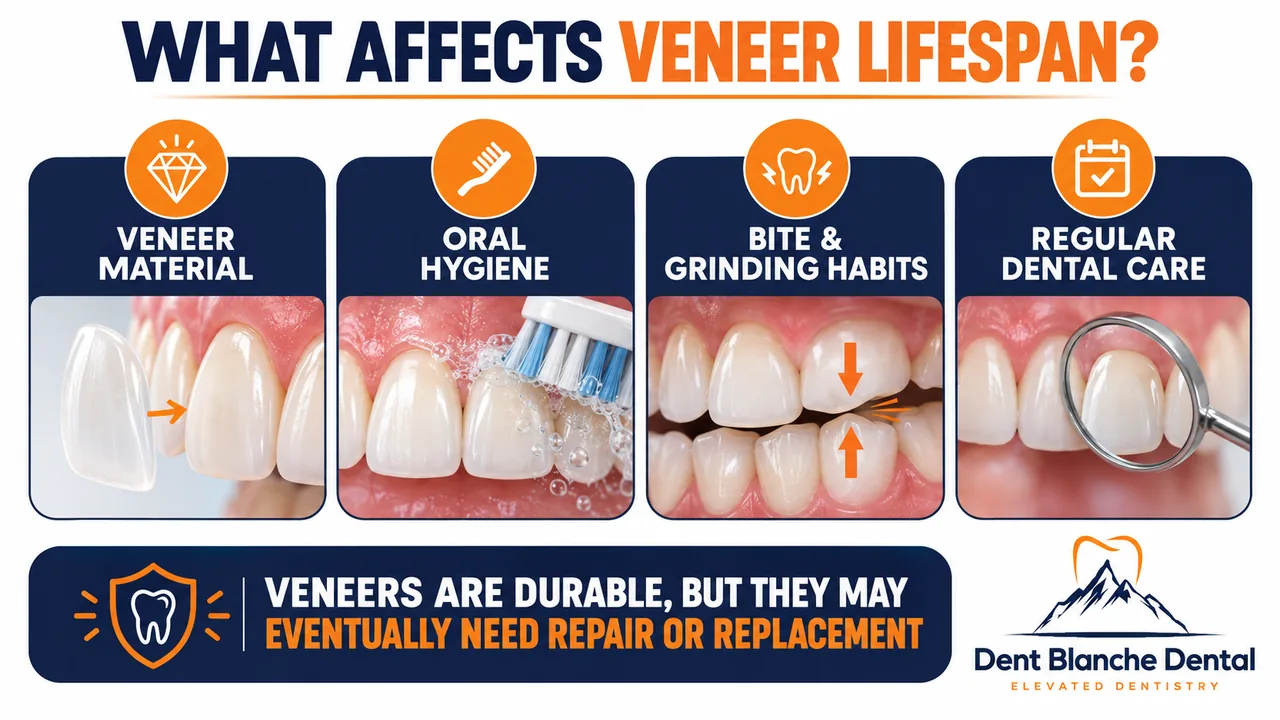
What Affects How Long Veneers Last on Teeth?
Several factors determine how long dental veneers can last.
1. Veneer Material and Quality
Porcelain generally offers greater stain resistance and wear resistance than composite resin.
Accurate design, appropriate material selection, and reliable bonding also influence long-term success.
2. Oral Hygiene
Although the veneer material cannot develop cavities, the natural tooth underneath and around it can.
Plaque buildup, gum inflammation, and tooth decay may compromise veneer margins and longevity.
3. Teeth Grinding and Clenching
Bruxism places excessive pressure on veneers and increases the risk of chipping, cracking, or debonding.
A professionally fitted nightguard may help protect your restorations.
Learn more about protecting your teeth with a custom mouthguard.
4. Diet and Lifestyle
Biting hard objects, chewing ice, or using teeth to open packages can damage veneers.
Coffee, tea, tobacco, and other staining substances may discolor composite veneers and the natural teeth surrounding porcelain restorations.
5. Regular Dental Care
Professional examinations allow your dentist to monitor veneer margins, gum health, and bite alignment.
Early detection of problems can help prevent more extensive damage.
How Long Should Veneers Last With Proper Care?
With good oral hygiene and regular maintenance, porcelain veneers may last well beyond a decade, while composite veneers may remain functional for several years.
However, veneers are not permanent restorations.
Some patients need earlier repairs or replacement because of trauma, grinding, decay, or changes in their oral health.
The goal is to preserve the underlying tooth while maintaining a healthy, attractive smile.
Learn the Dental Veneer Process
At Dent Blanche Dental, Dr. Saad uses a personalized approach to cosmetic dentistry, supported by digital smile design and modern restorative technology.
Step 1: Consultation and Smile Evaluation
We evaluate your teeth, gums, bite, and cosmetic goals to determine whether veneers are appropriate.
We also discuss alternative treatments when necessary.
Step 2: Veneer Material Selection
We help you compare porcelain and composite veneers based on appearance, durability, treatment requirements, and budget.
Step 3: Tooth Preparation
For conventional porcelain veneers, a small amount of enamel is usually removed to accommodate the restoration.
Some composite and minimal-preparation veneer techniques require less enamel reduction.
Step 4: Digital Impressions and Smile Design
Digital scanning and CAD/CAM technology help us plan the shape, proportions, and fit of your restorations.
Step 5: Veneer Fabrication
Porcelain veneers may be fabricated through a dental laboratory or suitable in-office digital workflows.
Temporary veneers may be needed depending on the treatment.
Step 6: Bonding and Final Adjustments
Once the veneers are ready, we evaluate their appearance, fit, and bite before bonding and polishing.
Our approach to cosmetic dentistry on Fifth Avenue emphasizes personalized treatment planning and natural-looking results.
How to Make Your Veneers Last Longer
Proper care helps maximize veneer lifespan and protect the natural teeth supporting them.
Practice Good Oral Hygiene
Brush twice daily with a soft-bristled toothbrush and fluoride toothpaste. Floss gently every day.
Choose a non-abrasive toothpaste to help preserve the surface finish of your restorations.
Wear a Nightguard if You Grind Your Teeth
If you clench or grind your teeth, ask your dentist whether a custom nightguard is appropriate.
Reducing excessive bite forces may help prevent veneer fractures.
Avoid Biting Hard Objects
Avoid chewing ice, biting pens, or using your teeth as tools.
These habits can cause porcelain veneers to chip and composite veneers to fracture.
Limit Staining Habits
Reduce tobacco use and rinse with water after consuming strongly pigmented beverages.
Porcelain is relatively stain-resistant, but composite resin and exposed tooth surfaces may discolor.
Schedule Regular Dental Checkups
Routine examinations and professional cleanings help maintain healthy gums and identify potential problems early.
Your dentist can also evaluate whether a veneer needs polishing, repair, or replacement.
Signs Your Dental Veneers Need Replacement
Even well-maintained veneers may eventually require attention.
Common warning signs include:
- Chipped or cracked veneer surfaces.
- Loose or detached veneers.
- Darkening around veneer margins.
- Persistent tooth sensitivity.
- Gum inflammation around the restoration.
- Changes in your bite.
- Recurrent decay near the veneer.
If a veneer becomes loose or breaks, save the restoration and contact your dentist. Avoid attempting to glue it back yourself.
For urgent dental concerns, explore our emergency dental services.
Are Dental Veneers Right for You?
Veneers may be appropriate for patients who want to improve tooth color, shape, size, or minor spacing concerns.
However, untreated cavities, active gum disease, significant grinding, or major bite problems may need attention before cosmetic treatment.
Patients with extensively damaged or missing teeth may require other restorative options, such as a dental bridge or dental implants.
At Dent Blanche Dental, we develop individualized treatment plans based on oral health, aesthetics, and long-term function.
Explore more cosmetic dentistry information on our dental blog.
Frequently Asked Questions About Veneer Lifespan
How long do veneers last?
Most dental veneers last approximately 5–15 years. Porcelain veneers generally last longer than composite resin veneers, although individual results vary.
How long do dental veneers last on teeth?
Porcelain veneers often last 10–15 years or more, while composite veneers commonly last 5–7 years. Proper maintenance can extend their useful life.
How long do porcelain veneers last?
Porcelain veneers typically last 10–15 years, and some last considerably longer with excellent oral hygiene and favorable bite conditions.
How long do resin veneers last?
Composite resin veneers generally last 5–7 years. Some remain functional for up to 10 years, depending on wear, staining, and maintenance.
Can veneers last 20 years?
Yes. Some porcelain veneers last 20 years or longer, but this is not guaranteed. Material quality, bite forces, oral hygiene, and regular maintenance influence longevity.
Do veneers need to be replaced?
Yes. Veneers may eventually need replacement because of wear, fracture, debonding, decay, or changes in the supporting teeth and gums.
Do veneers ruin your natural teeth?
Properly planned veneers do not automatically damage teeth. However, conventional veneers usually require irreversible enamel removal, and the underlying teeth remain vulnerable to decay and other problems.
Can veneers get cavities?
The veneer material cannot decay, but the natural tooth underneath or around the restoration can develop cavities.
Can you whiten veneers?
Traditional whitening products do not significantly change the color of porcelain or composite veneers. Your dentist can recommend professional cleaning, polishing, or replacement if discoloration becomes a concern.
How much do dental veneers cost?
The cost depends on the material, number of teeth treated, and complexity of the procedure.
Porcelain veneers generally cost more than composite veneers.
Learn more about dental veneers cost, affordable veneer options, and cosmetic dentistry costs.
Are veneers worth the investment?
Veneers can be a worthwhile cosmetic treatment for appropriate candidates. Their value depends on your goals, oral health, budget, and willingness to maintain them.
For additional guidance, read about common misconceptions about porcelain veneers and our discussion of porcelain dental veneers.
You can also explore cosmetic dentistry topics on The Wonder Tooth Podcast.
Schedule Your Dental Veneer Consultation at Dent Blanche Dental
How long do veneers last? With appropriate materials, expert planning, and consistent care, veneers can enhance your smile for many years.
At Dent Blanche Dental, Dr. Radwa Saad combines digital smile design, modern restorative technology, and personalized cosmetic dentistry to create beautiful, functional smiles.
Whether you are considering new veneers or need to evaluate existing restorations, our team can help you understand your treatment options.
Dent Blanche Dental
3640 Lawrenceville Road, Princeton, NJ 08540
950 Fifth Avenue, New York, NY 10075
Call: (609) 890-1888
Visit Dent Blanche Dental to request a consultation.


