Medically Reviewed and last updated on 11/01/2026
How Does Dental Plaque Work?
How Dental Plaque works: Dental plaque works by forming a sticky bacterial biofilm on your teeth. When you eat sugary or starchy foods, certain plaque bacteria produce acids that weaken tooth enamel and can eventually cause cavities. Plaque accumulating along the gumline can also trigger inflammation and gum disease. Fortunately, daily brushing, interdental cleaning, and professional dental care help control plaque.
At Dent Blanche Dental in Princeton, NJ, Dr. Radwa Saad emphasizes early prevention to protect natural teeth and maintain healthy gums.
Key Takeaways
- Dental plaque is a sticky bacterial film that forms continuously.
- Plaque bacteria produce acids when they metabolize certain carbohydrates.
- Repeated acid exposure can cause enamel mineral loss and cavities.
- Plaque near the gumline can cause gingivitis.
- Plaque may harden into tartar if it remains undisturbed.
- Brushing and flossing remove soft plaque, but tartar requires professional removal.
What Is Dental Plaque Made Of?

Dental plaque is a biofilm containing bacteria surrounded by a sticky matrix of bacterial products and substances from saliva and food.
This structure helps bacteria attach to teeth, especially near the gumline, between teeth, and around dental restorations.
Plaque is usually colorless or pale yellow. Therefore, you may not notice it until your teeth feel coated or fuzzy.
According to the American Dental Association, plaque is a major contributor to tooth decay and gum inflammation.
How Dental Plaque Works: 5 Stages of Formation
1. A Protective Film Forms on Teeth
Shortly after cleaning, proteins from saliva create a thin layer called the acquired pellicle.
This natural coating helps protect enamel but also provides a surface where bacteria can attach.
2. Bacteria Attach and Multiply
Bacteria from your mouth adhere to the pellicle.
Over time, they multiply and form organized communities within a sticky biofilm.
Because plaque develops continuously, even clean teeth need regular brushing.
3. Plaque Bacteria Produce Acids
When you consume sugar or other fermentable carbohydrates, certain bacteria produce acids.
These acids lower the pH near your tooth surface.
As a result, enamel may lose minerals through a process called demineralization.
4. Repeated Acid Attacks Damage Enamel
Saliva helps neutralize acids and supports remineralization.
However, frequent sugary snacks and drinks create repeated acid exposure.
If mineral loss exceeds repair over time, a cavity may develop.
5. Plaque Can Harden Into Tartar
Plaque left on teeth can absorb minerals from saliva and gradually harden into calculus, also called tartar.
Once mineralized, it cannot be removed reliably with ordinary brushing or flossing.
Learn more in our plaque vs. tartar comparison.
How Dental Plaque Works to Cause Cavities
Plaque does not automatically cause a cavity every time you eat.
Instead, tooth decay develops when acid-producing bacteria repeatedly expose enamel to low pH.
The process often follows this sequence:
- Plaque accumulates on the tooth.
- Bacteria metabolize sugars and starches.
- Acids dissolve minerals from enamel.
- Repeated exposure causes progressive damage.
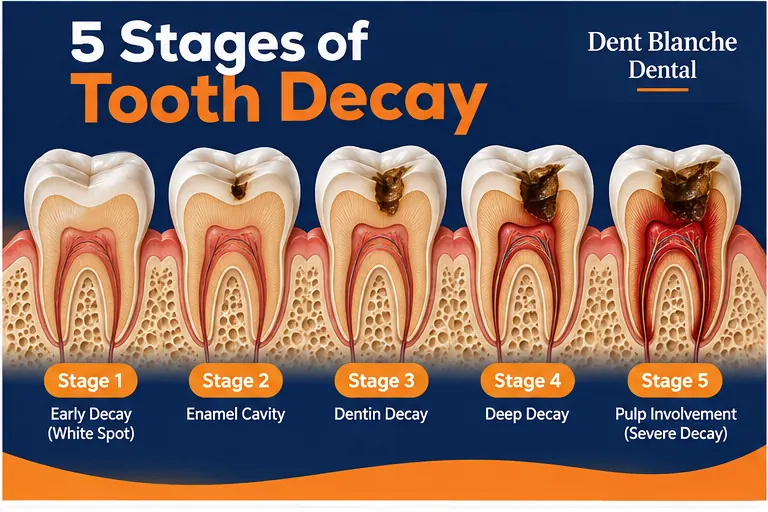
- An untreated cavity may reach deeper tooth layers.
Early decay may not cause pain. Therefore, regular dental examinations are important.
Read our guide to tooth decay stages, symptoms, and treatment.
How Dental Plaque Affects Your Gums

Plaque along the gumline can trigger an inflammatory response.
Early gum inflammation, called gingivitis, may cause:
- Red or swollen gums.
- Bleeding during brushing or flossing.
- Tenderness.
- Persistent bad breath.
Fortunately, gingivitis is often reversible with effective plaque control and professional care.
However, susceptible patients may develop periodontitis, which damages the tissues and bone supporting teeth.
If your gums bleed regularly, schedule a dental examination rather than stopping flossing altogether.
Dental Plaque vs. Tartar: What’s the Difference?
| Feature | Dental plaque | Tartar |
|---|---|---|
| Texture | Soft, sticky biofilm | Hard, mineralized deposit |
| Color | Often colorless or pale yellow | Often yellow or brown |
| Formation | Develops continuously | Forms when plaque mineralizes |
| Home removal | Brushing and interdental cleaning | Cannot be reliably removed at home |
| Main concern | Cavities and gum inflammation | Retains plaque and complicates cleaning |
Both require attention, but they need different removal methods.

How to Remove Dental Plaque at Home
You can remove most accessible soft plaque with a consistent oral hygiene routine.
1. Brush Twice Daily
Use fluoride toothpaste and a soft-bristled toothbrush.
Brush for two minutes, paying particular attention to the gumline and back teeth.
An electric toothbrush may help patients who struggle with manual brushing.
2. Clean Between Your Teeth
Floss or use an appropriate interdental cleaner once daily.
This removes plaque from areas that toothbrush bristles cannot reach effectively.
3. Reduce Frequent Sugar Exposure
Limit continuous snacking and sipping sugary beverages.
Instead, choose water between meals and avoid prolonged exposure to sweetened drinks.
4. Use Mouthwash When Appropriate
A fluoride or antimicrobial rinse may provide additional benefits for selected patients.
However, mouthwash does not replace brushing and interdental cleaning.
5. Schedule Professional Cleanings
Your dental hygienist can remove hardened tartar and deposits that home care misses.
Explore our professional dental cleaning services.
The Cleveland Clinic’s plaque removal guide provides additional practical recommendations.
Can You Remove Hardened Plaque Yourself?

No. Once plaque becomes tartar, professional scaling is the safest and most reliable removal method.
Avoid scraping your teeth with metal tools, sharp objects, or homemade instruments.
These methods may damage enamel, injure gums, or leave deposits behind.
During a dental cleaning, your hygienist may use hand instruments or ultrasonic scaling, depending on your needs.
Patients with periodontal disease may require deeper treatment rather than a routine cleaning.
How to Prevent Dental Plaque Buildup
You cannot permanently stop plaque from forming because bacteria naturally live in your mouth.
However, you can control harmful buildup.
For effective prevention:
- Brush twice daily with fluoride toothpaste.
- Clean between teeth every day.
- Limit frequent sugary snacks.
- Drink water regularly.
- Avoid tobacco.
- Replace worn toothbrush heads.
- Follow your dentist’s recommended cleaning schedule.
Our preventive dentistry program helps patients develop routines based on their individual risks.
When Should You See a Dentist for Plaque?
Schedule an evaluation if you notice:
- Persistent bleeding gums.
- Hard deposits near the gumline.
- Ongoing bad breath.
- Tooth sensitivity.
- Swollen or receding gums.
- Loose teeth.
Professional examinations help identify problems before they become more difficult to treat.
Frequently Asked Questions About Dental Plaque
How Does Dental Plaque Work?
Dental plaque contains bacteria that attach to teeth. Some bacteria produce acids from sugars and starches, while plaque near the gums can trigger inflammation.
What Causes Dental Plaque on Teeth?
Plaque forms naturally when oral bacteria attach to tooth surfaces and develop a sticky biofilm.
How Quickly Does Dental Plaque Form?
Plaque begins forming soon after teeth are cleaned and continues developing throughout the day.
Can Dental Plaque Cause Cavities?
Yes. Repeated acid production by plaque bacteria can weaken enamel and eventually cause tooth decay.
Can Dental Plaque Cause Gum Disease?
Yes. Plaque near the gumline can cause gingivitis and contribute to periodontitis in susceptible patients.
What Is the Best Way to Remove Plaque From Teeth?
Brush twice daily with fluoride toothpaste and clean between teeth every day. Professional cleanings remove tartar and remaining deposits.
Can You Remove Tartar at Home?
No. Hardened tartar requires professional dental instruments for safe removal.
Does Mouthwash Remove Dental Plaque?
Some mouthwashes help reduce plaque bacteria, but they do not replace mechanical cleaning with a toothbrush and interdental cleaner.
Why Do I Get Plaque Even When I Brush?
Plaque forms continuously. Incomplete brushing, missed interdental areas, crowded teeth, and certain oral conditions can increase buildup.
Is Dental Plaque the Same as Tooth Decay?
No. Plaque is a bacterial biofilm. Tooth decay is damage to tooth structure caused by a sustained imbalance between mineral loss and repair.
How Often Should I Get a Dental Cleaning?
Your dentist should recommend a schedule based on gum health, cavity risk, tartar accumulation, and medical history. Many patients attend approximately every six months, while others need more frequent visits.
Prevent Dental Plaque at Dent Blanche Dental in Princeton, NJ
Understanding how dental plaque works helps you protect your teeth before problems develop.
At Dent Blanche Dental, Dr. Radwa Saad and our dental team provide preventive examinations, professional cleanings, gum evaluations, and personalized oral hygiene guidance.
We welcome patients from Princeton, Lawrenceville, West Windsor, Plainsboro, and surrounding communities.
Dent Blanche Dental
3640 Lawrenceville Road
Princeton, NJ 08540
Call: (609) 890-1888