By Dr. Radwa Saad, DMD, BDS, MSc, MICOI
Last update 08/30/2026
Dark line at the base of a tooth: Have you noticed a dark line while brushing or looking in the mirror?
It can be alarming.
Many people immediately worry that the tooth is dying or that they have a cavity. Others assume it is only a stain and ignore it for months.
The truth is that a dark line near the gumline can have several different causes. Some are harmless surface stains that can be removed during a professional cleaning, while others may indicate tooth decay, gum disease, worn fillings, or even a cracked tooth that requires prompt treatment.
Knowing the difference can help you protect your smile before a small problem becomes a bigger one.
In this guide, you’ll learn why dark lines appear near the gumline, when they require treatment, how dentists diagnose the problem, and what you can do to keep your teeth healthy for years to come.
Overview
A dark-line-at-base-of-tooth is a common dental concern that can develop because of surface stains, tartar buildup, aging dental restorations, tooth decay, gum recession, or other oral health conditions. While some dark lines are cosmetic, others may indicate problems that require professional evaluation. Understanding the cause is the first step toward choosing the right treatment and preventing additional damage.
Key Takeaways
- A dark line near the gumline is not always a cavity.
- Surface stains are one of the most common causes.
- Gum recession can expose darker root surfaces.
- Old fillings and crowns may develop visible margins over time.
- Tooth decay near the gumline should be treated promptly.
- Regular professional cleanings help remove many external stains.
- Persistent discoloration should be examined by a dentist.
- Digital X-rays and clinical examinations help identify the underlying cause.
- Early treatment is often simpler and more conservative.
- Preventive dental visits remain the best way to protect your smile.
Why Does a Dark Line Appear Near the Gumline?
When patients notice discoloration near the gums, they often assume every dark mark is a cavity.
Fortunately, that is not always the case.
Several conditions can create a visible dark area where the tooth meets the gums.
Common causes include:
- Surface staining
- Tartar buildup
- Tooth decay
- Gum recession
- Aging dental fillings
- Older crowns
- Cracked teeth
- Root surface discoloration
- Smoking or tobacco use
- Certain foods and beverages
Determining the exact cause requires a professional dental examination.
Dark-Line-at-Base-of-Tooth: Surface Stains
One of the most common reasons for a dark-line-at-base-of-tooth is external staining.
Over time, pigments from food and beverages can accumulate near the gumline where plaque naturally collects.
Common staining sources include:
- Coffee
- Tea
- Red wine
- Tobacco
- Dark-colored berries
- Soda
- Certain mouth rinses
Patients frequently notice:
- dark spot on tooth near gum
- dark line on tooth near gum
- dark lines on teeth near gums
- dark spots on teeth near gums
These stains usually affect the outer enamel and often improve after a professional cleaning.
Dark-Line-at-Base-of-Tooth: Tartar Along the Gumline
Plaque that is not removed every day hardens into tartar.
Unlike plaque, tartar cannot be removed with brushing alone.
It often appears:
- Yellow
- Brown
- Dark brown
- Black
Patients may describe:
- black line on tooth near gum
- black line near gums teeth
- black gum line around teeth
- black around gums line
Tartar tends to collect where teeth meet the gums, making the discoloration especially noticeable.
Professional scaling safely removes these deposits.
Dark-Line-at-Base-of-Tooth: Gum Recession
As gums recede, they expose the root surface.
Unlike enamel, root cementum is naturally darker.
This can create the appearance of:
- dark gum line around tooth
- black line around gum
- black gum line around tooth
- black around gum line

Many patients mistake exposed roots for cavities.
A dental examination can distinguish between normal root exposure and tooth decay.
Dark-Line-at-Base-of-Tooth: Tooth Decay
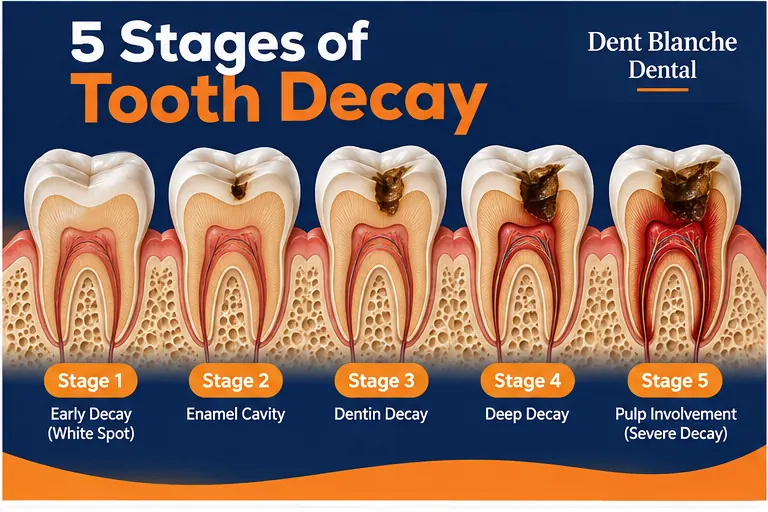
Unfortunately, a dark area near the gumline may sometimes represent decay.
Gumline cavities are especially common in patients with:
- Gum recession
- Dry mouth
- Frequent snacking
- High sugar intake
- Poor oral hygiene
Patients often search:
- dark spot on tooth at gum line
- dark spot on tooth near gum line
- spot on tooth near gum
- my tooth is turning black at the gum line
Early treatment helps preserve healthy tooth structure and often prevents more extensive procedures.
Dark-Line-at-Base-of-Tooth: Aging Fillings
Older fillings may develop visible margins as materials age.
Tiny gaps can collect stain over time.
Although discoloration alone does not always indicate failure, your dentist should evaluate any restoration that appears to be changing.
Dark-Line-at-Base-of-Tooth: Worn Dental Crowns
Crowns can also develop dark margins.
Possible reasons include:
- Aging materials
- Receding gums
- Cement staining
- Wear over many years
A visible line does not automatically mean the crown needs replacement.
However, it should be examined during your regular dental visit.
Dark-Line-at-Base-of-Tooth: Brown Spots Near the Gums
Some patients notice isolated brown areas rather than continuous lines.
Examples include:
- brown spot on tooth near gum line
- brown spots on teeth near gum line
- brown teeth stains near gums
- brown teeth near gums
These spots may result from:
- Surface staining
- Early decay
- Demineralization
- Old restorations
Treatment depends on the underlying cause.
Comparison Table
| Possible Cause | Professional Evaluation Recommended? |
|---|---|
| Coffee or tea stains | ✓ |
| Tartar buildup | ✓ |
| Gum recession | ✓ |
| Early cavity | ✓ |
| Old filling | ✓ |
| Crown margin discoloration | ✓ |
| Root discoloration | ✓ |
What Symptoms Should You Watch For?
Not every dark line causes discomfort.
However, schedule a dental evaluation if you notice:
- Tooth sensitivity
- Pain when chewing
- Bleeding gums
- Persistent bad breath
- Swelling
- A growing dark area
- Food trapping near the gumline
- Loose fillings
Early diagnosis often means simpler treatment.
Dark-Line-at-Base-of-Tooth: How Dentists Find the Cause
A dark line near the gumline may look similar from one patient to another, but the underlying cause can be very different.
For one person, it may simply be coffee stains.
For another, it could be early tooth decay or an aging dental restoration.
That is why a professional examination is so important.
At Dent Blanche Dental, we use a combination of clinical experience and advanced digital technology to determine exactly why the discoloration has developed.
Dark-Line-at-Base-of-Tooth: Your Dental Examination
During your appointment, Dr. Radwa Saad will carefully evaluate:
- The color of the discoloration
- Whether it can be polished away
- The condition of your gums
- Existing fillings or crowns
- Signs of tooth decay
- Gum recession
- Bite forces
- Tooth mobility
- Plaque and tartar buildup
Every finding helps determine the most appropriate treatment.
Dark-Line-at-Base-of-Tooth: Digital X-Rays
Not every problem is visible to the naked eye.
Digital X-rays allow your dentist to evaluate areas beneath the enamel and below the gumline.
They help detect:
- Cavities
- Bone loss
- Defective fillings
- Infection
- Root problems
- Cracks affecting deeper tooth structure
Early diagnosis often prevents more extensive treatment later.
Dark-Line-at-Base-of-Tooth: Is It a Cavity?
One of the biggest concerns patients have is whether a dark area automatically means tooth decay.
The answer is not always.
Dark discoloration may result from:
- Surface staining
- Tartar
- Exposed root surfaces
- Existing restorations
However, if the area feels:
- Soft
- Sticky
- Rough
- Sensitive
it could indicate a cavity.
Only a dental examination can confirm the diagnosis.
Dark-Line-at-Base-of-Tooth: When Stains Are the Problem
External staining is usually the easiest cause to treat.
Professional dental cleanings often remove stains caused by:
- Coffee
- Tea
- Tobacco
- Red wine
- Dark-colored foods
Patients commonly describe:
- dark spots on teeth at gum line
- dark spots on teeth near gums
- brown teeth stains near gums
- brown teeth near gums
Professional polishing frequently restores a brighter appearance.
Dark-Line-at-Base-of-Tooth: When Gum Disease Is Responsible
Inflamed gums can trap plaque and tartar close to the gumline.
As deposits harden, they become darker.
Signs of gum disease include:
- Bleeding while brushing
- Swollen gums
- Persistent bad breath
- Gum recession
- Tooth sensitivity
Professional periodontal treatment removes harmful bacteria and allows the gums to heal.
Ignoring gum disease may eventually lead to tooth loss.
Internal Links
- Periodontal Disease
- Dental Deep Cleaning Cost
Dark-Line-at-Base-of-Tooth: Old Dental Fillings
Composite fillings can last for many years.
As restorations age, staining sometimes develops around their edges.
Patients may notice:
- A thin brown line
- Dark margins
- A shadow near the filling
This doesn’t always mean the filling has failed.
However, replacement may be recommended if:
- Decay develops
- The filling leaks
- Cracks appear
- The restoration becomes loose
Dark-Line-at-Base-of-Tooth: Older Silver Fillings
Amalgam (silver) fillings sometimes create a gray or bluish appearance beneath the enamel.
This phenomenon can create a dark shadow even when the filling is functioning normally.
Your dentist will evaluate whether replacement is necessary based on:
- Structural integrity
- Presence of decay
- Patient preference
- Cosmetic concerns
Dark-Line-at-Base-of-Tooth: Tooth Decay Near the Gumline
Gumline cavities require prompt treatment because decay tends to spread along the softer root surface more quickly than on enamel.
Common risk factors include:
- Gum recession
- Dry mouth
- Frequent sugary snacks
- Poor oral hygiene
- Existing restorations
Early treatment often requires only a small tooth-colored filling.
Delaying treatment may increase the likelihood of needing:
- Larger fillings
- Crowns
- Root canal therapy
- Tooth extraction
Dark-Line-at-Base-of-Tooth: Could It Be a Cracked Tooth?
Small cracks can collect stain over time.
Patients sometimes notice a thin dark line that follows the direction of the crack.
Possible symptoms include:
- Pain while chewing
- Sensitivity to cold
- Sharp pain when releasing pressure
- Intermittent discomfort
Early diagnosis increases the chance of saving the tooth.
Dark-Line-at-Base-of-Tooth: Treatment Options
Treatment depends entirely on the cause.
Possible treatments include:
- Professional dental cleaning
- Polishing
- Scaling and root planing
- Tooth-colored fillings
- Dental bonding
- Crown replacement
- New dental crown
- Gum disease treatment
- Root canal therapy when necessary
No two patients require exactly the same approach.
Treatment Comparison Table
| Cause | Possible Treatment |
|---|---|
| Surface stain | Professional cleaning |
| Tartar | Scaling and polishing |
| Gum disease | Deep cleaning |
| Small cavity | Composite filling |
| Large cavity | Dental crown |
| Defective filling | Filling replacement |
| Cracked tooth | Crown or other restorative treatment |
| Gum recession | Gum treatment or monitoring |
Dark-Line-at-Base-of-Tooth: Can It Be Prevented?
Many causes of gumline discoloration are preventable.
Healthy habits include:
- Brush twice daily with fluoride toothpaste.
- Floss every day.
- Limit sugary drinks.
- Reduce tobacco use.
- Schedule professional cleanings.
- Treat small cavities early.
- Replace worn restorations when recommended.
Preventive care is almost always less expensive and less invasive than treating advanced dental problems.
Common Causes at a Glance
| Appearance | Possible Cause |
|---|---|
| Brown line | Surface stain or old restoration |
| Black line | Tartar or gum recession |
| Gray shadow | Old silver filling |
| Dark spot | Early cavity or stain |
| Dark ring around crown | Aging restoration |
| Black area near gums | Tartar, decay, or gum disease |
Dark-Line-at-Base-of-Tooth: Frequently Asked Questions
Is a Dark Line at the Base of a Tooth Always a Cavity?
No.
A dark-line-at-base-of-tooth is not always caused by tooth decay.
Other possible causes include:
- Surface stains
- Hardened tartar
- Gum recession
- Older dental fillings
- Dental crowns
- Natural root discoloration
Because several conditions can look similar, it’s important to have the area examined by your dentist.
Why Is There a Dark Spot on My Tooth Near the Gum?
A dark spot may be caused by:
- Staining
- Early decay
- A worn filling
- Root exposure
- Mineral changes in the tooth
Only a professional examination can determine the exact cause.
Why Are My Teeth Black at the Gum Line?
Patients often ask:
“Why are my teeth black at the gum line?”
The answer depends on the underlying condition.
Common possibilities include:
- Tartar buildup
- Surface staining
- Gum recession
- Tooth decay
- Old restorations
- Tobacco staining
Professional cleaning often removes superficial discoloration, while other causes may require restorative treatment.
Can a Dark Gum Line Be Removed?
Sometimes.
If the discoloration is caused by plaque, tartar, or external stains, professional cleaning can significantly improve its appearance.
If the discoloration results from:
- Gum recession
- Root exposure
- Aging restorations
- Internal tooth discoloration
additional treatment may be recommended.
Can Gum Disease Cause Black Areas Near the Teeth?
Yes.
As plaque hardens into tartar, it often becomes darker.
Professional periodontal treatment removes these deposits and helps restore healthier gums.
When Should I See a Dentist?
Schedule an appointment if you notice:
- A new dark line
- A growing dark spot
- Bleeding gums
- Persistent bad breath
- Tooth sensitivity
- Pain while chewing
- Swelling
- Loose fillings
- A cracked tooth
Prompt evaluation helps prevent more extensive treatment later.
Why Choose Dent Blanche Dental?
At Dent Blanche Dental, we believe every patient deserves a healthy smile and a clear understanding of their treatment options.
Dr. Radwa Saad combines more than 20 years of clinical experience with advanced digital dentistry to diagnose discoloration accurately and recommend conservative, evidence-based treatment whenever possible.
Our Princeton practice offers:
- Comprehensive dental examinations
- Professional cleanings
- Digital X-rays
- CBCT imaging
- Tooth-colored fillings
- Dental bonding
- Same-day CEREC crowns
- Periodontal therapy
- Cosmetic dentistry
- Preventive dental care
Whether the dark line is simply a stain or an early cavity, our goal is to restore your oral health while preserving as much natural tooth structure as possible.
Schedule Your Appointment Today
If you’ve noticed a dark-line-at-base-of-tooth, don’t wait until it becomes painful.
Early diagnosis often means simpler, more conservative treatment.
At Dent Blanche Dental, Dr. Radwa Saad will carefully examine the area, identify the underlying cause, and develop a personalized treatment plan that protects your long-term oral health.
Whether the discoloration is caused by staining, tartar, gum recession, an old filling, or tooth decay, we’re here to help restore your smile with compassionate, evidence-based care.
Call Dent Blanche Dental today at (609) 890-1888 or request your appointment online to schedule your comprehensive dental examination.
Additional Comparison Tables
Dark Line vs. Other Gumline Changes
| Appearance | Most Likely Cause | Should You See a Dentist? |
|---|---|---|
| Brown stain | Surface stain | ✓ |
| Black line | Tartar or gum recession | ✓ |
| Dark spot | Early decay or stain | ✓ |
| Gray margin around crown | Aging restoration | ✓ |
| Dark root surface | Gum recession | ✓ |
| Soft dark area | Tooth decay | ✓ |
Treatments for a Dark Line at the Base of a Tooth
| Cause | Possible Treatment |
|---|---|
| Surface staining | Professional cleaning and polishing |
| Tartar buildup | Scaling and root planing if needed |
| Early cavity | Tooth-colored composite filling |
| Defective filling | Filling replacement |
| Worn crown | Crown replacement if indicated |
| Gum recession | Periodontal treatment or monitoring |
| Internal discoloration | Internal bleaching (selected cases) or restoration |
Tips to Prevent Gumline Discoloration
| Healthy Habit | Benefit |
|---|---|
| Brush twice daily | Removes plaque before it hardens |
| Floss every day | Cleans where toothbrushes cannot reach |
| Limit coffee, tea, and tobacco | Reduces external staining |
| Schedule professional cleanings | Removes tartar and stains |
| Treat small cavities early | Prevents more extensive damage |
| Replace aging restorations | Reduces leakage and discoloration |